

‘Strange Stones’ explores the cultural significance of strange stones (guaishi) in Chinese aesthetic tradition. From the Song dynasty onward, these microcosmic landscapes—whether displayed in gardens or on scholars' desks—were revered as high art, valued above monumental sculptures. In Chinese thought, art was understood as a process of communication between human consciousness and nature, with the highest works transcending medium to achieve naturalness and spontaneity. Strange stones, as found objects shaped by nature over millennia, embodied this ideal. They served as meditative portals, offering scholars access to enlightenment by stilling the intellect and enabling union with the Dao. We highlight small, strangely marked pebbles, documented in classical texts and now emerging again from deserts like the Taklamakan and Gobi alongside works by contemporary artists. They remind viewers that the aesthetic of naturalness extends beyond stone to any object shaped by time and nature.
21 March–9 April 2016
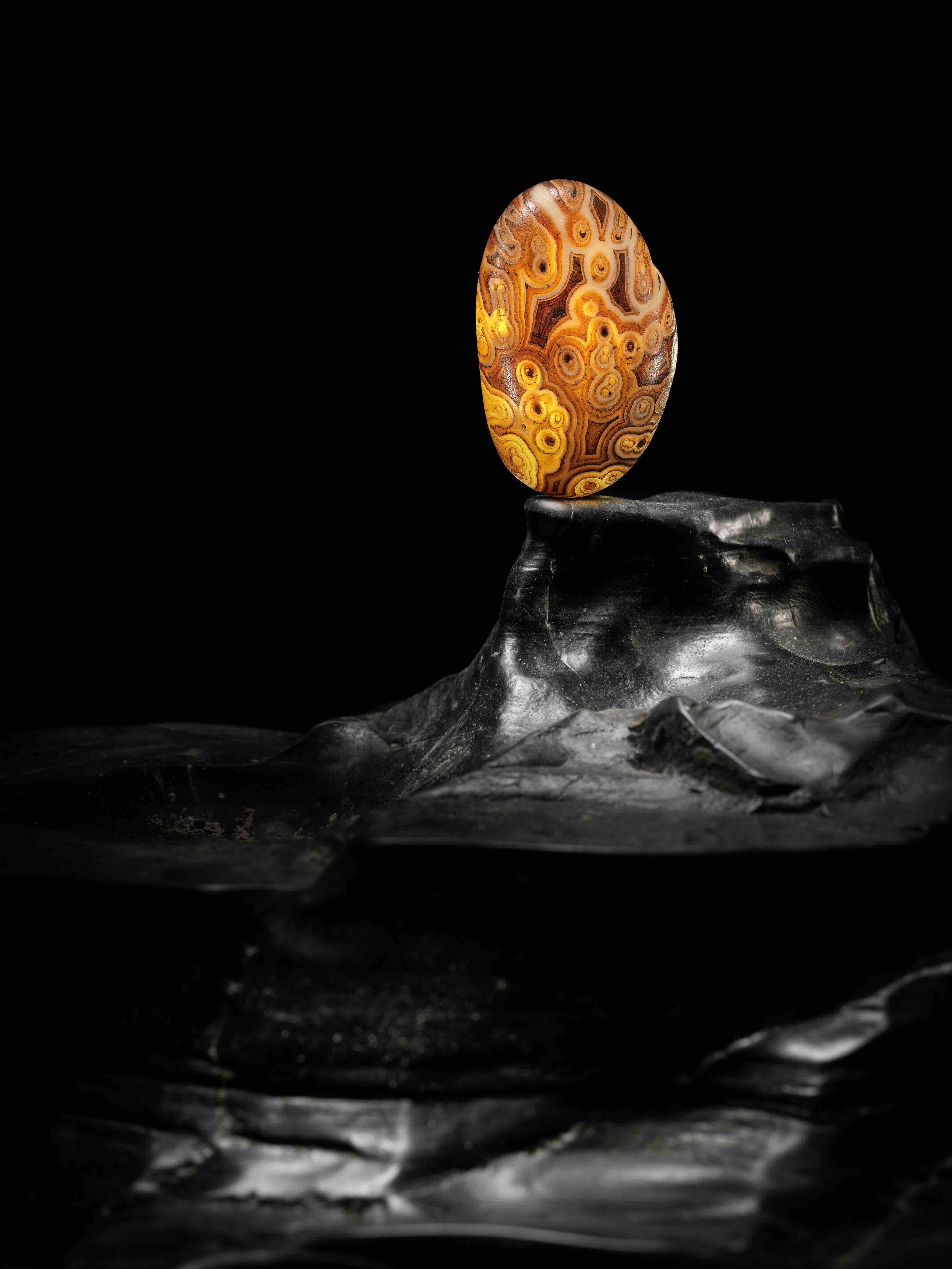
A dark-brown and caramel agate boulder
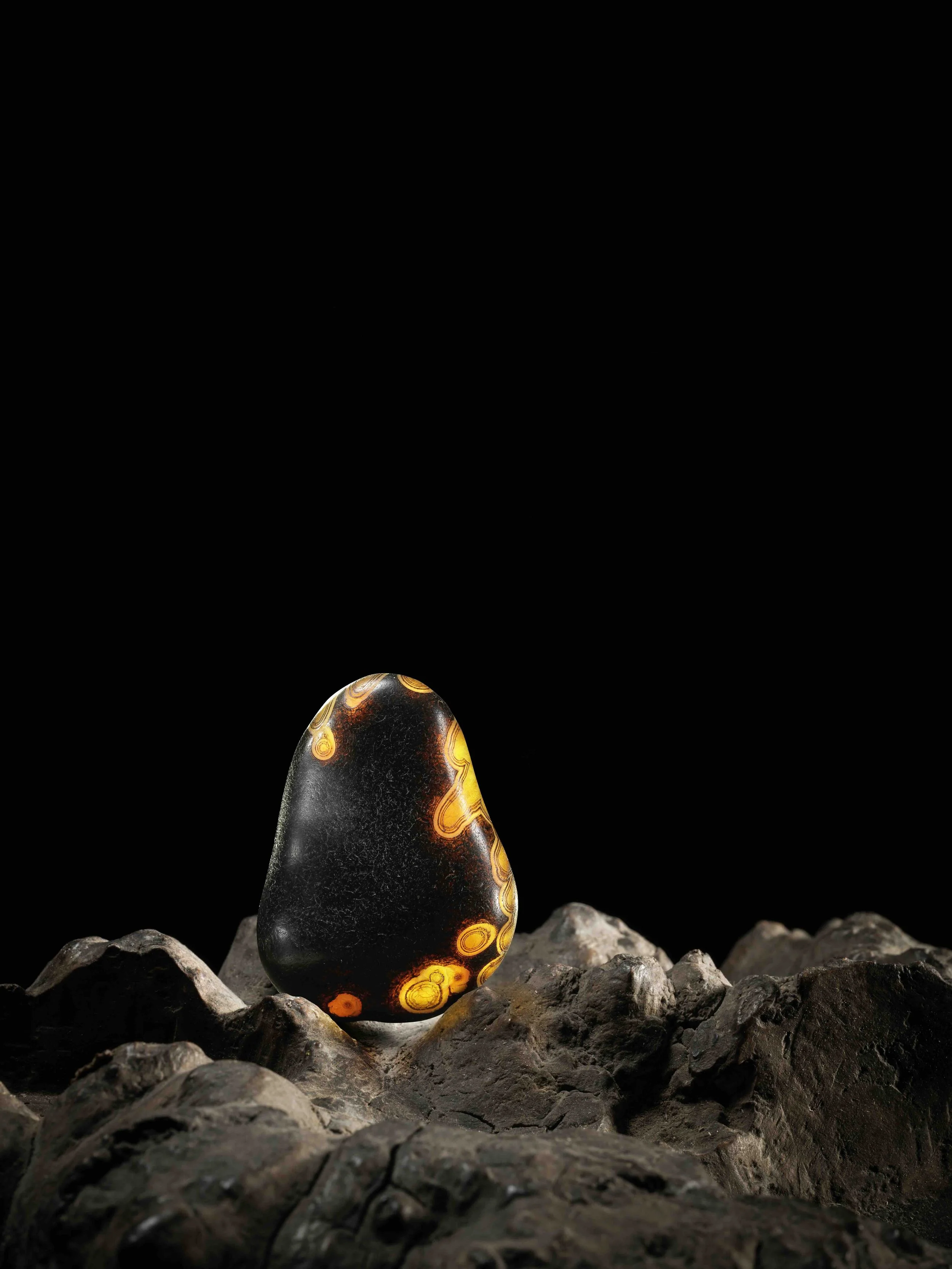
A black and golden agate pebble in the form of a gourd
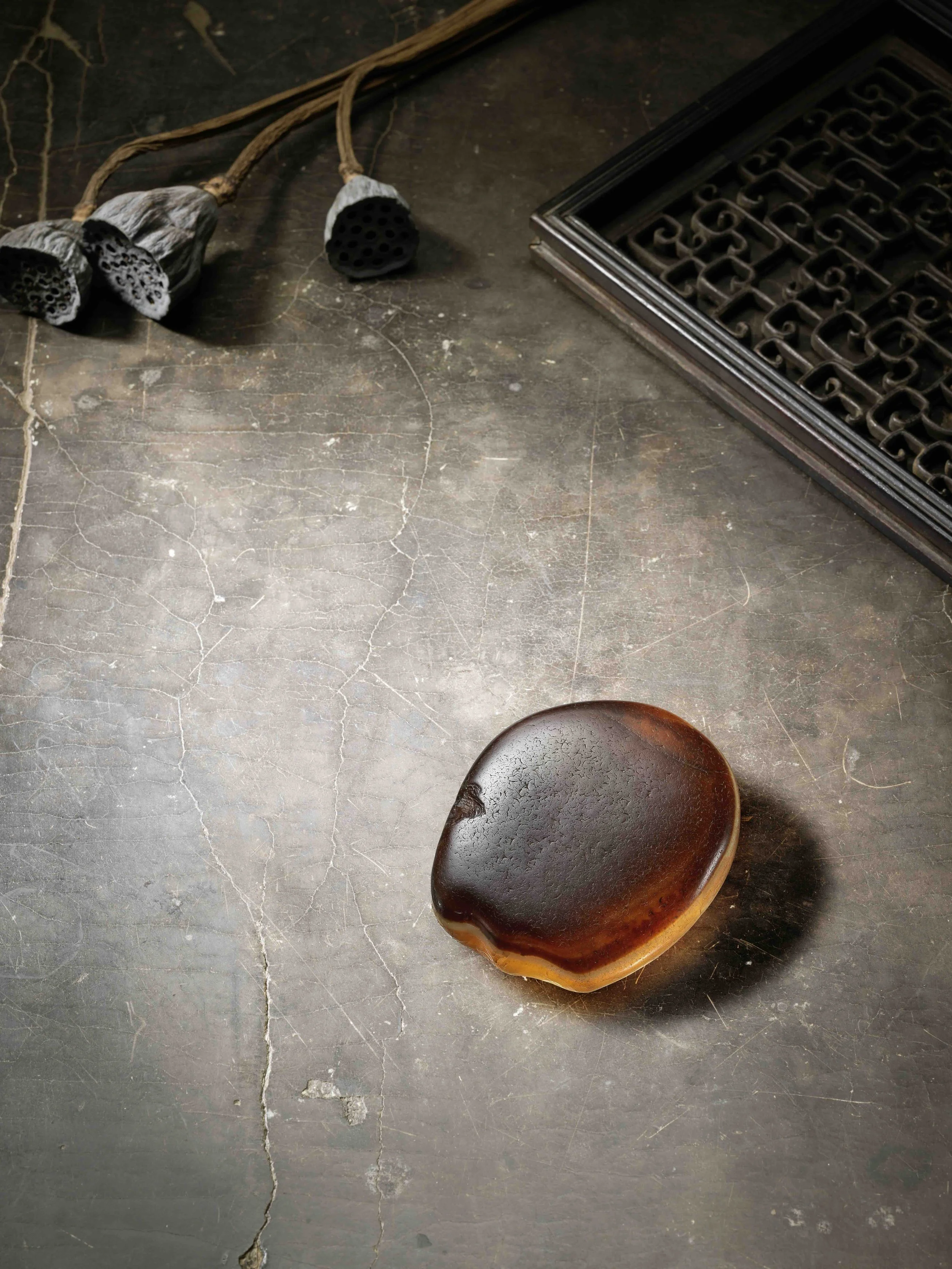
A deep russet pebble naturally formed as a inkstone
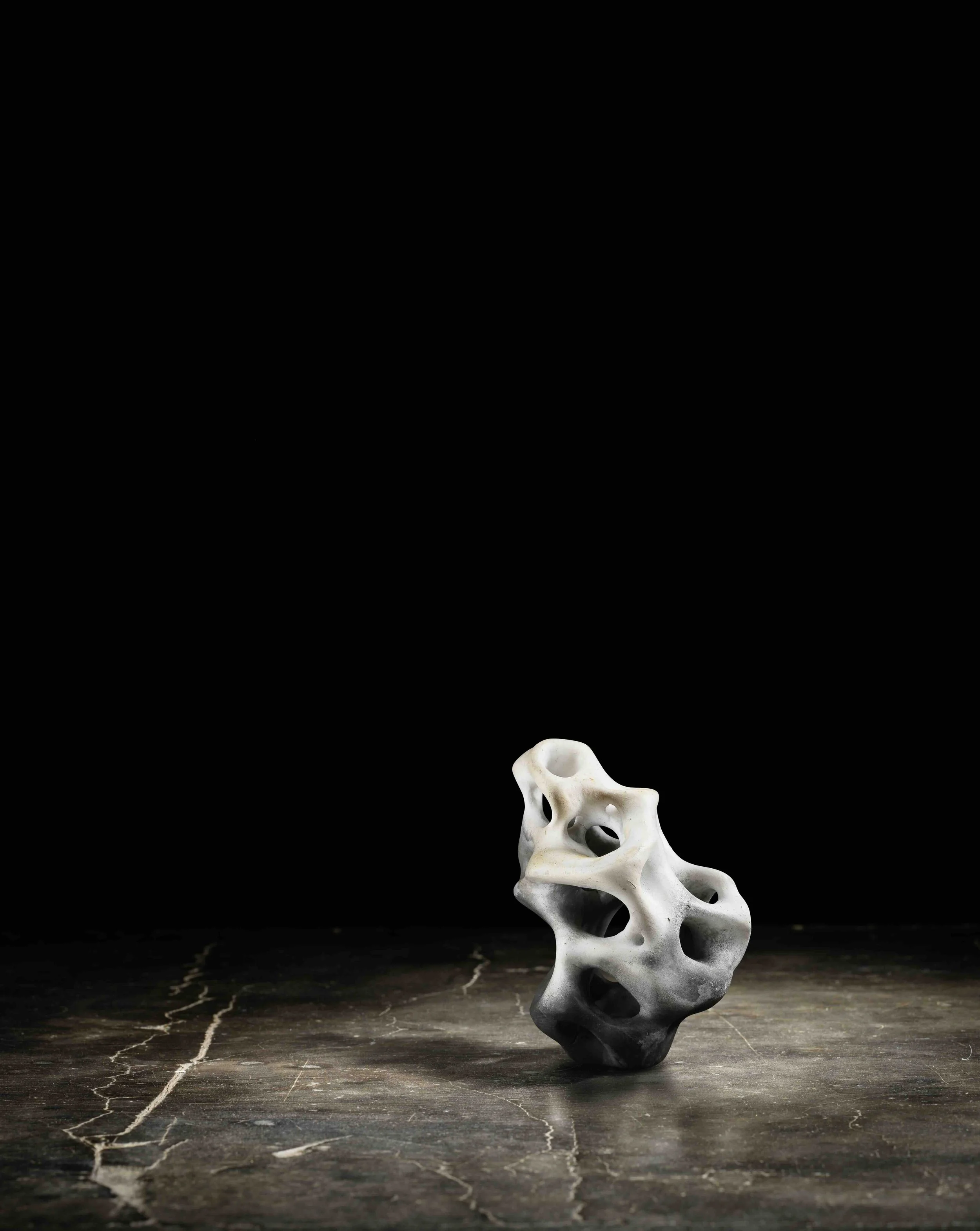
Clay Lingbi Stone in Palm No. 2, 2016, by Zhao Meng, Porcelain, 8.6 x 7 x 5.7 cm
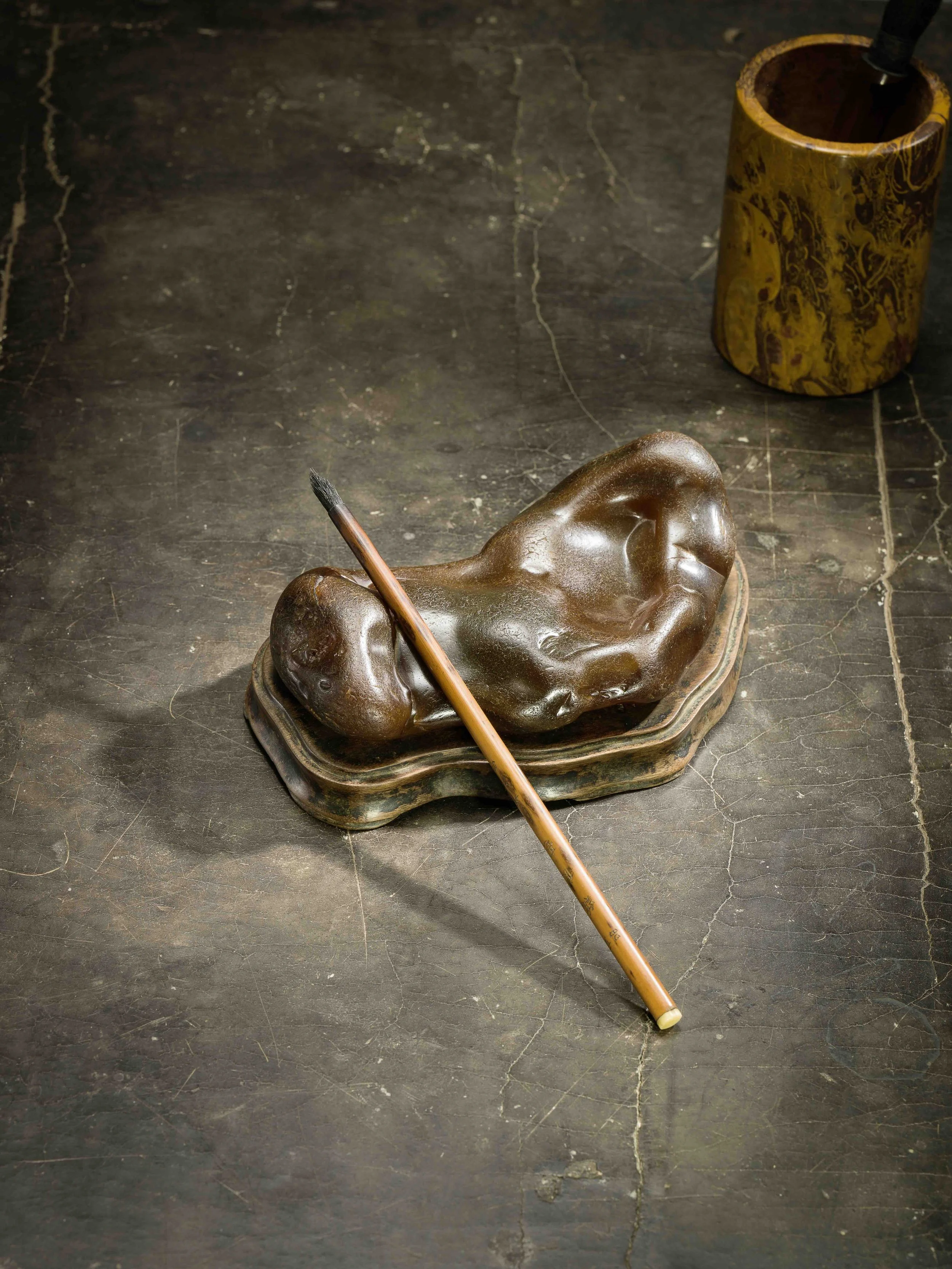
A large translucent deep russet agate pebble naturally forming a wrist rest